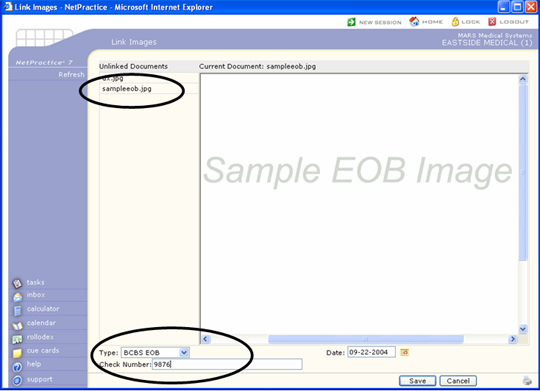
Link Images
With the Link Images function, you can upload and link image files
scanned outside of CGM webPRACTICE, assign an Image Type to each file,
and link the image file to a patient account or to a payment.
Prior to using this function, you should review the Image
Scanning steps listed in the Introduction, System Processes
section.
After you have scanned and saved the images to your workstation, you can
upload the images and then link them to patient accounts. If you are a
self-hosted client, you also have the option of scanning and saving
images in the C:\TempImages\9999_1 folder (replace C:\ with your
drive letter, 9999 with your client number, and replace the number 1
with your database number). This eliminates the need to use the Upload
Images function.
NOTE: .tiff, .pdf, and .bmp image types can only be used for
Explanations of Benefits and can only be used within this function. If
you are scanning multiple page documents and saving them as .tiff or .pdf
image types, you will need to have an image viewing software application
loaded on each workstation that will be viewing multiple page images.
CGM webPRACTICE does not support viewing multiple page images from
within the application. For example, if you use .pdf image types, you
will need Adobe Acrobat Reader to view the images.
Upload Images
- On the System menu, click Image Management, and then click Link Images.
- In the Action Column, click Upload Images.
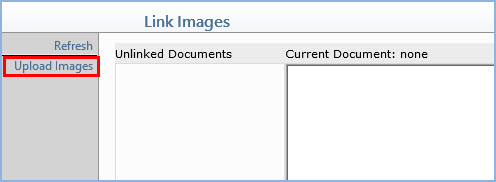
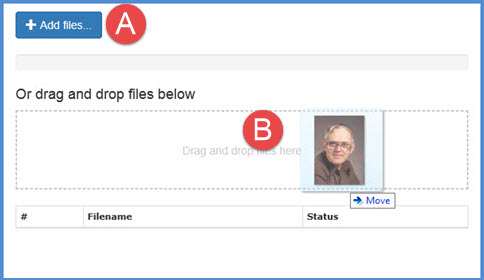
- When the File Upload dialog box displays, you have two options:
- Click Add Files, navigate to the folder where the scanned image(s) is stored, select the image(s) you want and click Open.
- Open Windows Explorer, navigate to the folder where the scanned image(s) is stored, select the image(s) you want, drag and drop the selected image(s) onto the File Upload dialog box.
NOTE: The image size is limited to 30MB.
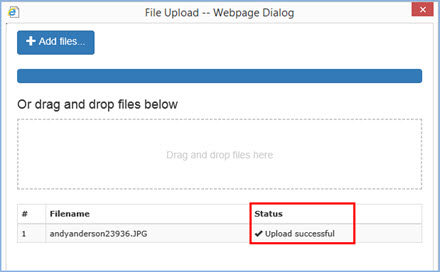
- Check the file upload Status in the bottom portion of the File Upload dialog box to confirm the files successfully uploaded.
- Click Close to return to the Link Images screen.
NOTE: Any non-standard characters in the uploaded filename (for example, a trademark symbol ™) are automatically stripped from the filename after upload. For example, Product™.pdf displays as Product.pdf in the Unlinked Documents list.
Linking an Image to a Patient Account
- Access the Link Images function.
- In the Unlinked Documents column, click the image you want.
- Select the image type from the Type list.
- In the Patient box, type the patient account number you want or click the ellipsis button to search for the account number.
- In the Date box, type the date you want or click the calendar icon to select a date.
- In the Description box, type the image description.
- Click Save.
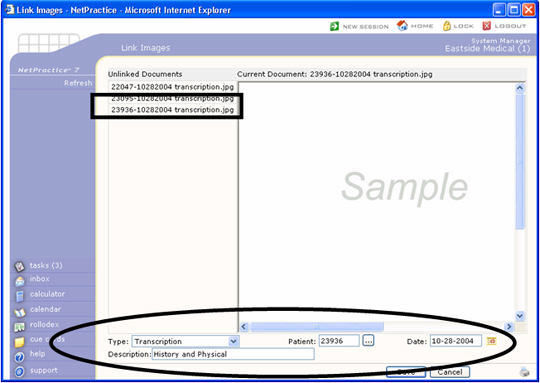
After an image has been linked to a patient account it will be removed
from the Unlinked Documents column.
NOTE: The image file is converted when it is linked, so the
original image file in the C:\TempImages\9999_1 folder will no
longer exist.
Deleting an Unlinked Document
To delete a document from the Unlinked Documents list without
linking it to a patient account or payment, click the document to
select it. The Delete button becomes active. Click Delete
to remove the document.
Linking an EOB Image
- Access the Link Images function.
- In the Unlinked Documents column, click the image you want.
- Select the image type from the Type list.
- In the Check Number box, type the check number.
- In the Date box, type the date you want or click the calendar icon to select a date.
- Click Save.
After you linked the EOB image to an image type, you can use the
Link Image
function in Payment Entry to link the image to the payment
transaction.