Superbill Wizard

With the Superbill Wizard function, you can create custom superbills to print or to use with the E-Superbill function.

The Superbill Wizard provides the following functions:

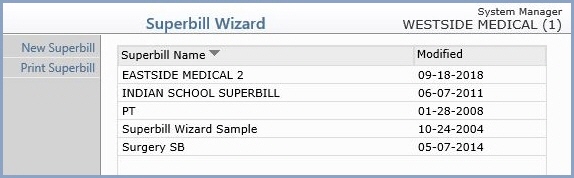
Upon accessing this function, CGM webPRACTICE will list a summary of any previously created superbills. You can edit, delete, or review a superbill in detail, by selecting it. To select a superbill, click anywhere in the row containing the superbill information.


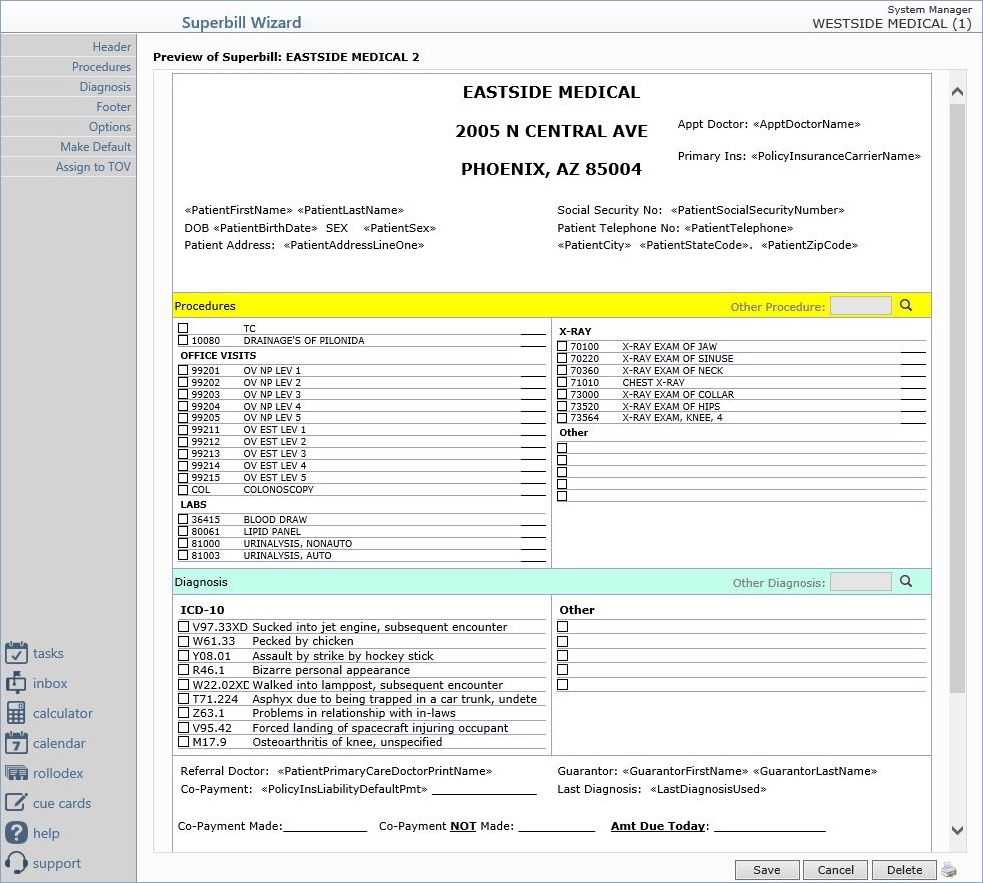
A preview of the superbill will appear and you can use the functions in the Action Column to edit the superbill.


Create a New Superbill
Click New Superbill in the Action Column to access the main functions necessary to create a superbill.


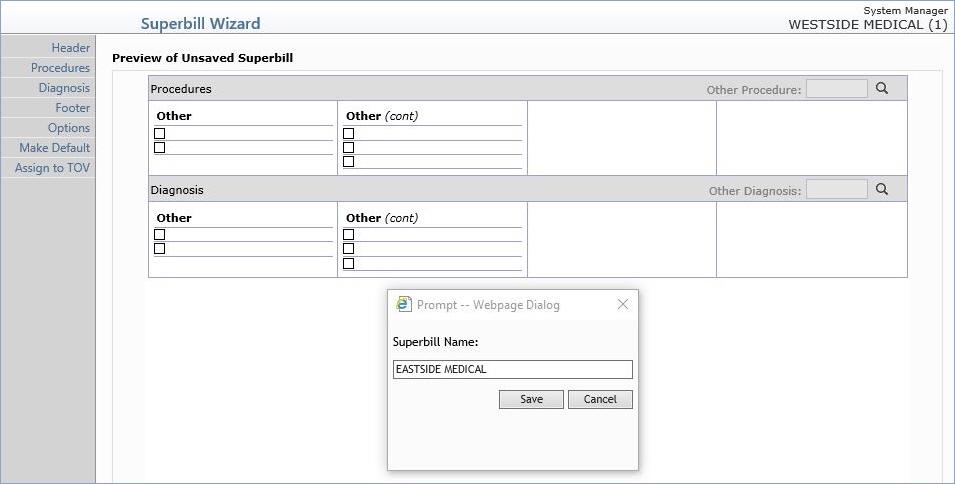
The functions in the Action Column (Header, Procedures, Diagnosis, Footer) correlate to the standard sections of the superbill. The first step upon accessing this function is to click Save and name the new superbill.


You should save frequently while creating the superbill to prevent the loss of data. To save the data, you must click Save twice and select the superbill again from the list of superbills.

Create the Header and Footer Sections
The Header and Footer sections are created separately but they use the same functionality. It is not mandatory that you include Header or Footer sections in your superbill. They are simply provided to accommodate the typical needs of a medical practice.

For better control over alignment of the Header and Footer, you should format these sections by inserting all data and images into tables using the Table element.

Whether you click Header or Footer in the Action Column, the Rich Text Editor (RTE) will be displayed. For detailed instructions on using the RTE, see the Rich Text Editor (RTE) Instructions located on the Introduction, System Processes Help menu.


If you are creating multiple superbills, you can copy a Header or Footer from an existing superbill using the Copy From function in the Action Column. From the list of existing superbills, select the superbill you want to copy the Header or Footer from.


Create the Procedure Section
Click Procedures in the Action Column to create the procedure section of the superbill. The following steps are provided to use as a guideline when creating this section.

Step 1. Select Procedure Section Options
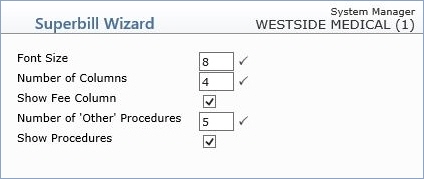
Click Options in the Action Column to format the Procedures section.


Data Field Information
Prompt Response Req Len
Font Size Type the font size you want to use in the Procedures section. The default is set at eight. 2
Number of Columns Type the number of columns you want to use in the Procedures section. The default is four columns. 2
Show Fee Column If you want a Fee column to appear on the superbill, select this check box. This column will display the charge amount for every procedure selected. If there are multiple units entered for a procedure, it will be automatically calculated in the fee column.   1
Number of 'Other' Procedures Type the number of blank lines you want to appear in the 'Other' category. The default is five blank lines. This is where you can manually add non-standard procedures. 2
Show Procedures If you want the Procedures section to show on the superbill, select this check box. If you want to create a superbill without the Procedures section and heading clear this check box.   1

Step 2. Create a Category
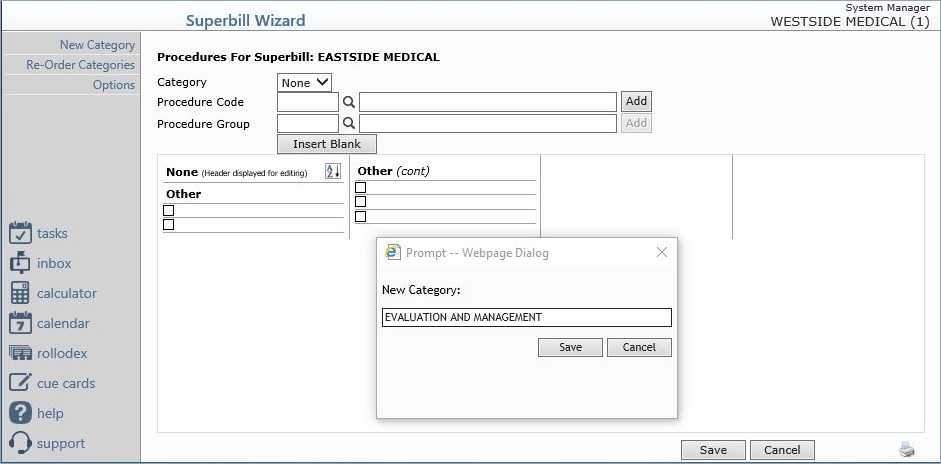
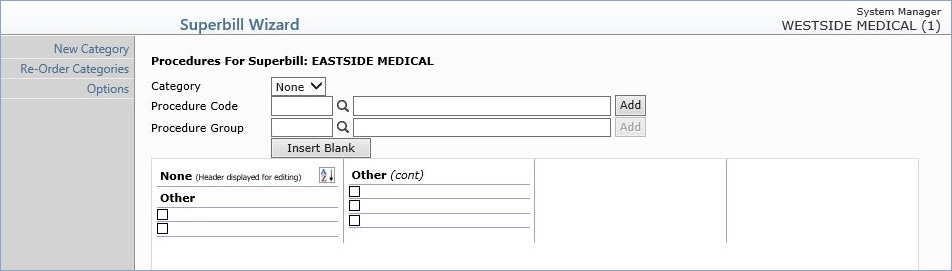
You can organize the procedure codes on the superbill under separate and distinct categories (office, procedures, labs, x-rays, etc.). To add categories, click New Category in the Action Column, type the category name and click Save. The category name will automatically display in the Category list box. To get the new category to appear in the Procedures section of the superbill, you must immediately add at least one procedure code. The Procedures section was designed to have one category added at a time along with its corresponding procedure codes to control the order in which they are displayed. Proceed to Step 3 to add the procedure codes for this category.

The categories are inserted into the superbill in the order they are selected, when entering procedure codes. After the categories and procedure codes have been inserted, you can go back and move, add or delete categories and codes as needed.

A default category called 'Other' is automatically inserted in this section along with five blank lines. This provides an area for non-standard procedures to be added manually at the time of service. This category will always display as the last category in the Procedures section. You can add or delete available lines from this category using the Options function in the Action Column.


Step 3. Insert Procedure Codes
The Procedure Codes and Procedure Group Codes come from your existing Procedure Code Tables.

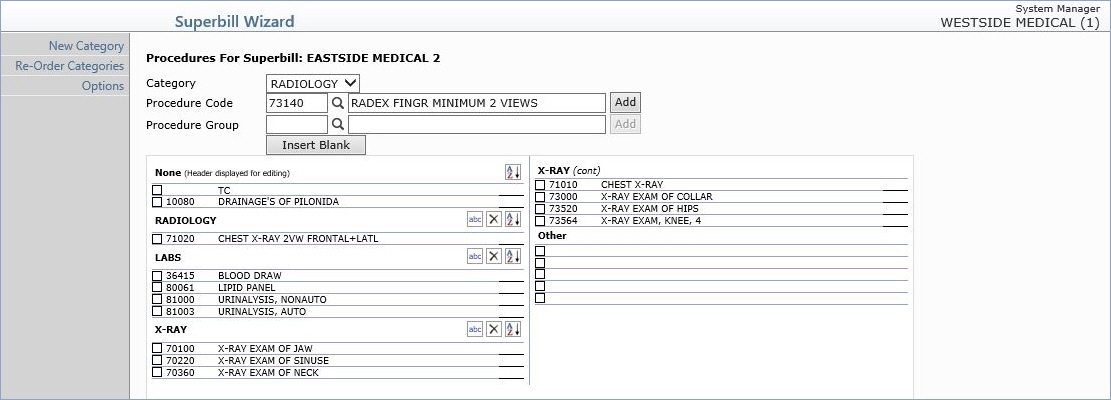
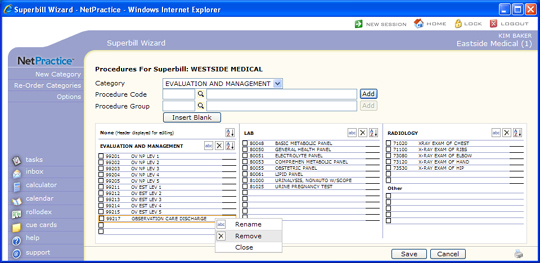
To insert procedures codes, select the Category you want. In the Procedure Code field, type the procedure code you want or click the magnifying glass to search the table. Hit Enter or click Add to add the code to the category. Procedure Group codes are entered in the same manner as Procedure Codes.

Click Insert Blank to add a blank procedure code line to the category so additional codes can be manually entered on the superbill at the time of service.

Repeat Steps 2 and 3 until all the categories and procedure codes have been inserted into the superbill.


Re-Order Categories
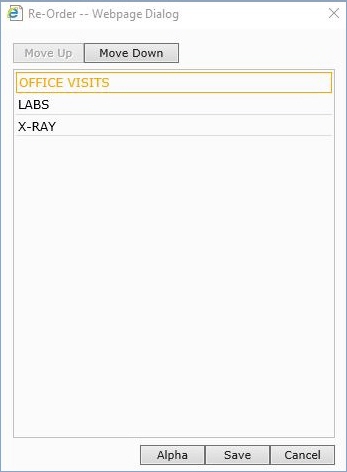
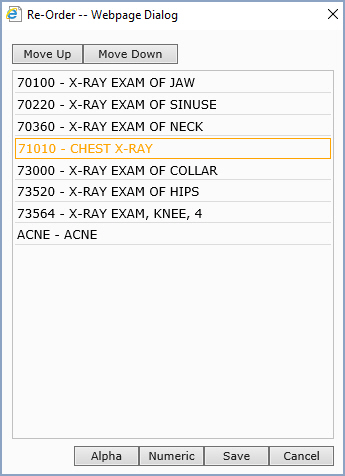
If you want to change the order of the categories, click Re-Order Categories in the Action Column. Click Alpha to automatically arrange the codes in alphabetical order. Or, click a category you want to move and click Move Up or Move Down to change the order of the categories.


Rename Category
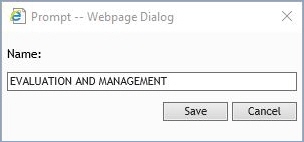
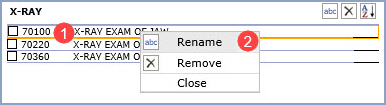
If you want to rename a category, click the 'abc' icon to the right of the category heading.


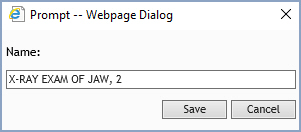
You can then edit the name of the category:


Remove Category
If you want to remove a category and all of the procedure codes included in that category, click the 'x' icon to the right of the category heading.


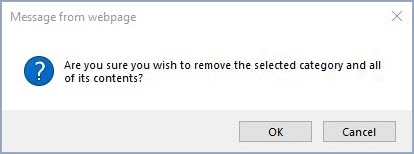
A message will display so you can confirm removing the category.


Re-Order Procedure Codes
If you want to reorder the procedure codes within a category, click the 'a-z' icon to the right of the category heading.


Click Alpha to automatically arrange the codes in alphabetical order. Click Numeric to automatically arrange the codes in numeric order. Or, click a procedure code you want to move and click Move Up or Move Down to change the order of the procedure codes.


Rename Procedure Codes
If you want to rename a procedure code, click the procedure code you want to edit and click Rename.


You can then edit the name of the procedure. This will not affect the name of the procedure in your Procedure Code Tables.


Remove Procedure Codes
If you want to remove a procedure code, click the procedure code you want to remove and click Remove.


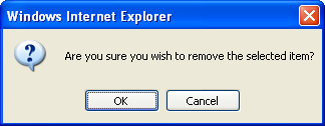
A message will display so you can confirm removing the procedure code.


Create the Diagnosis Section
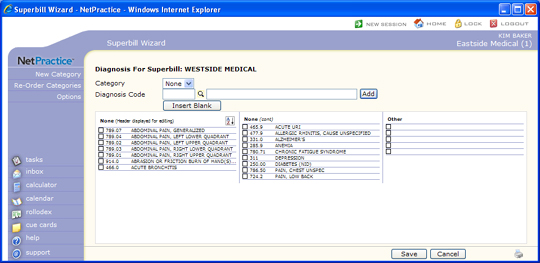
The Diagnosis section is created in the same manner as the Procedure Code section. Categories are not typically used for this section, but the option to use categories is still available. For detailed instructions, refer to Create the Procedure Section.


You can organize the diagnosis codes using the same functions available in the Procedures section:

Formatting Options
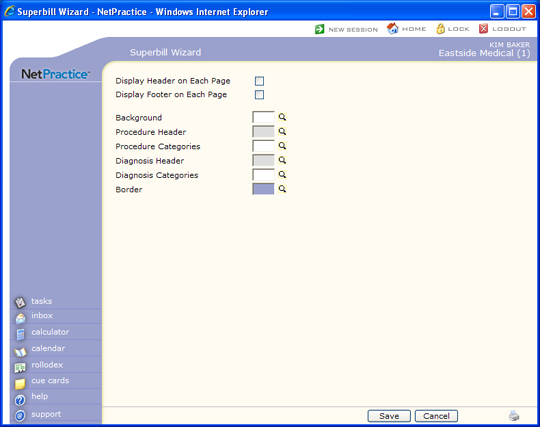
You can customize the look of your superbill. Click Options in the Action Column from the Preview of Superbill screen. You can choose whether or not to display the Header and Footer on each page of the superbill. You can also customize the colors of the superbill. Click the magnifying glass to select a color for each section.


Delete a Superbill
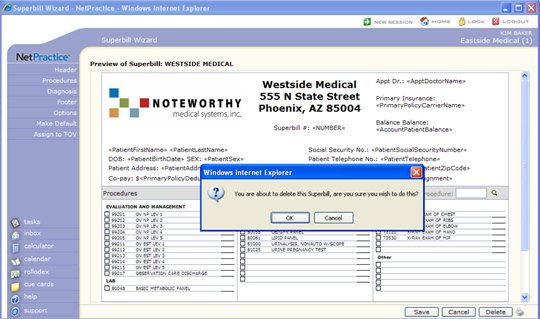
To delete a superbill select it from the summary list. When the preview of the superbill is displayed, click Delete.

A message will display so you can confirm the deletion of the superbill.


Make Default
If you will be using E-Superbills, you must select a superbill to use as a default. Click Make Default in the Action Column to make the selected superbill the default. If you will be printing superbills, you do not need to do this.

Assign to TOV (Type of Visit)
You can tie a particular superbill to a specific Type of Visit. For example, if you have a separate superbill for physical therapy services, you can assign it to your physical therapy Type of Visit. This superbill then becomes the 'default' for this Type of Visit.

Click Assign to TOV in the Action Column. The screen reflects all of the active Types of Visit from your Type of Visit Table and which superbill is currently the default for each type of visit. Select the check box next to the Type of Visit that you want to assign to the current superbill.

NOTE: See Print Superbills for additional information on how tying superbills to types of visits affects superbill printing.


Print Superbill
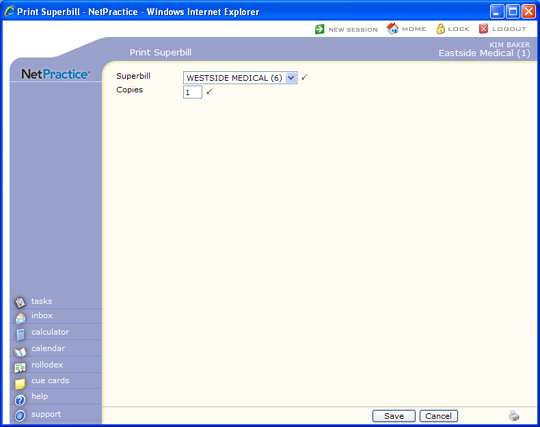
You can print a blank superbill by clicking Print Superbill in the Action Column from the Superbill Wizard summary screen.


Data Field Information
Prompt Response Req Len
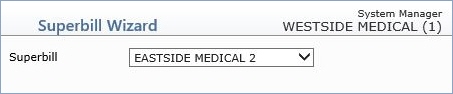
Superbill Select the superbill you want to print from the Superbill list. 10
Copies Type the number of copies you want to print of the superbill. 2