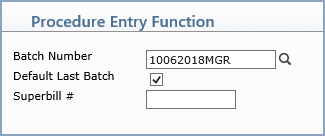
Procedure Entry Lead-in Screens

Upon accessing the Procedure Entry Function, one or any combination of the following screens displays based on how your practice has selected to post procedures:

Batch and Superbill Number

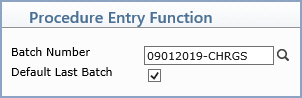
If your practice has selected to use batch numbers for posting procedures, this screen displays.


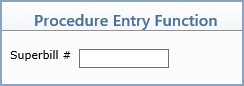
If your practice has selected to use superbill numbers for posting procedures, this screen displays.


If your practice has selected to use batch numbers and superbill numbers for posting procedures, this screen displays.


For information on using batches, see Transaction Batch Control. To enable using superbill numbers, you must select the Post from Superbill Number field in the Procedure Entry Integration function. You can only post using a Superbill Number if your practice uses the Print Superbills function in Scheduling.

Data Field Information
Prompt Response Req Len
Batch Number

Type the code you want or click the magnifying glass to search a list of every 'unlocked' batch. You can also create a new batch by typing in a batch number that does not exist and you will be asked if you want to create it.


If you select a batch that is locked, the message The Batch is Locked. To post transactions the Batch must be Unlocked. displays.
  17
Default Last Batch

If you want the last batch number (used by the current user, in the current database, for the current date) to default, select this check box.

 
If you select this check box while in any function in the system that contains a Batch Number field and then you access a different function that contains a Batch Number field, the Batch Number field will automatically default the last batch number used.
  1
Superbill # Type the applicable superbill number. If you type a superbill number that is invalid or one that cannot be identified, a No Superbill Number found, manual entry required message displays and then the patient look-up screen displays so you can proceed. The superbill number you typed then defaults in the Superbill # field.

If you type a superbill number that had been tied to an appointment but the Unposted Procedures were deleted for that patient, you are not allowed to use that superbill number and the message The charges that had been tied to this Superbill Number were cancelled displays.

If you type a Superbill Number that had been tied to an appointment but the appointment was Rescheduled or Cancelled, a message displays informing you it had been rescheduled or cancelled.
  10

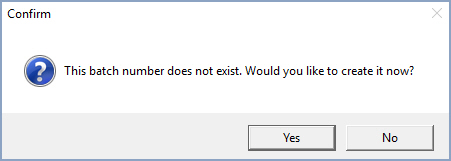
If you type a non-existing batch number, when you click Save, a message displays asking if you want to create a batch.


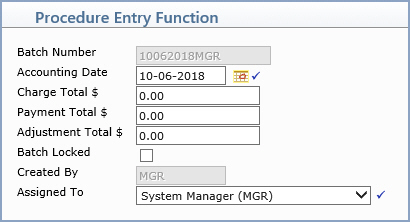
If you click Yes, the create a batch screen displays. For information on creating a batch, see Create a Batch.


Patient Look-up

If your practice does not post using superbill numbers, you are required to select the patient account you want. For detailed information on using the Patient Look-up Action Column functions, see Patient Look-up. You can also click the New Patient Action Column function to register a new patient without having to exit this function. For detailed information, see Patient Registration.


Unposted Procedures

If the selected patient has any procedures that were previously stored, the unposted procedures screen displays all the stored procedures for this patient. This does not include any charges entered in the Pre-Treatment function.


You can either select the stored charges for a date listed or click New Procedure in the Action Column to enter a new procedure. To select the stored charges for a date, click anywhere in the row containing the procedures. All the information for the stored charges automatically populates into the procedure entry screen. Since these charges are not yet posted, the accounting date is set to the date the charges were Stored. From here you can edit any fields, click Save to post the procedures, click Cancel (which returns the procedures to a stored status), or click Delete (which deletes the stored information). If you click Save, a message displays asking you to confirm the accounting date or select a different one. If you do not select any of the stored procedures, they remain stored.